How to compare two insurance policies: a plain-English checklist
A step-by-step method for comparing insurance policies of any type: premium versus deductible, exclusions, limits, waiting periods and the questions to ask before you sign. General guidance, not advice.
This article is general education to help you read and compare policies. It is not financial, legal or insurance advice. Policy wording and regulation differ by country, state and insurer; confirm details with a licensed adviser or the insurer before buying.
Insurance is the one purchase where the cheapest option can be the most expensive, because you only discover what you bought on the day you claim. Comparing two policies properly means comparing what they pay, not what they cost. This is the checklist behind our insurance hubs, from life insurance types compared to car insurance coverage types.
1. Compare like with like
Before looking at price, confirm the two policies are the same type with the same core coverage. A term life quote and a whole life quote are not comparable on premium alone; one builds cash value and one does not. An HMO and a PPO health plan with the same premium offer very different freedom to choose doctors. Our comparison pages exist to make this first step obvious, for example term life vs whole life insurance.
2. Premium and deductible together
A lower premium almost always comes with a higher deductible, the amount you pay before the insurer pays anything. Add a year of premiums to the deductible to get your worst-case annual cost for a single claim. Two policies that look $40 a month apart can be nearly identical on this number, or the "cheaper" one can cost more.
3. Limits and sub-limits
Every policy caps what it pays. Look for the overall limit, then for sub-limits buried in the schedule: jewellery capped at $1,500 on a home policy, a per-day hospital cash limit, a per-incident liability limit on a car policy. Two policies with the same headline limit can differ by thousands at the sub-limit level.
4. Exclusions
The exclusions section is short and worth reading twice. Flood and earthquake are almost always excluded from standard home and renters cover. Pre-existing conditions, high-risk sports and certain destinations are common health and travel exclusions. If an activity or risk matters to you, search the document for the word.
5. Waiting periods and conversion rights
Final expense and some health policies pay reduced or no benefits during an initial waiting period. Term life policies differ in whether and when they can be converted to permanent cover without a new medical exam. These clauses are invisible on a price comparison and decisive in real life.
6. Replacement cost or actual cash value
Property policies pay either to replace an item new or to pay its depreciated value. A five-year-old laptop is worth very little on an actual cash value basis. Replacement cost policies cost more and pay far more when it matters.
7. Claims reputation
Price comparison sites rank by premium. Regulators publish complaint ratios, and independent surveys rank insurers on claim satisfaction. A policy that is 10 percent cheaper from an insurer with twice the complaint ratio is not a bargain.
8. Who has to approve it
Lenders require full coverage on financed cars and homeowners insurance on mortgaged homes; landlords often require renters insurance. If a third party sets a minimum, compare policies that meet it rather than the cheapest available.
Putting it on one page
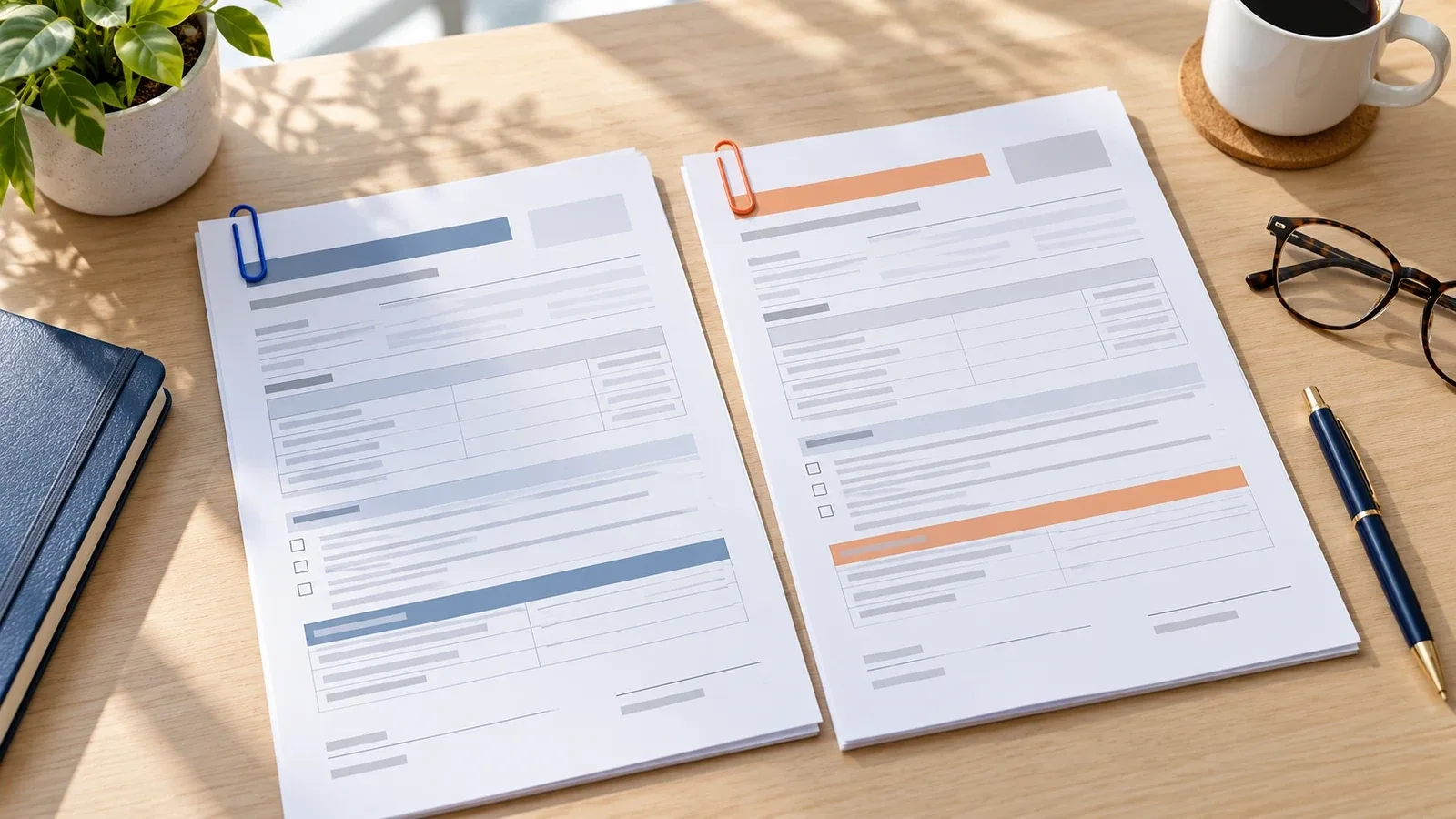
Write the two policies as columns and these eight items as rows. Fill in every cell from the policy documents, not from the sales page. Where you cannot find an answer, ask the insurer in writing. The side by side product comparison tool on our homepage works for this: type the attributes above, enter both policies' answers, and you have a decision sheet you can share with a partner or adviser.
Frequently asked questions
What is the most important thing to compare on an insurance policy?
What the policy pays and excludes, not the premium. Add a year of premiums to the deductible to compare worst-case cost, then read limits, sub-limits and exclusions.
Is the cheapest insurance policy a bad idea?
Not necessarily, but a cheaper premium usually means a higher deductible or lower limits. Compare like-for-like coverage before comparing price.
Where can I check an insurer's reputation?
Regulators publish complaint ratios and independent surveys rank claim satisfaction; both are better signals than price-comparison rankings.